A faecal egg count (FEC) is a test that identifies and quantifies internal parasite eggs in manure samples. By measuring eggs per gram (EPG) of faeces, this test helps assess the level of worm infestation and monitor the effectiveness of deworming programs. Regular FEC testing supports targeted treatment, reduces unnecessary deworming, and helps prevent parasite resistance.
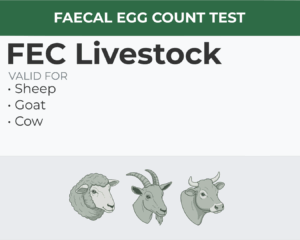
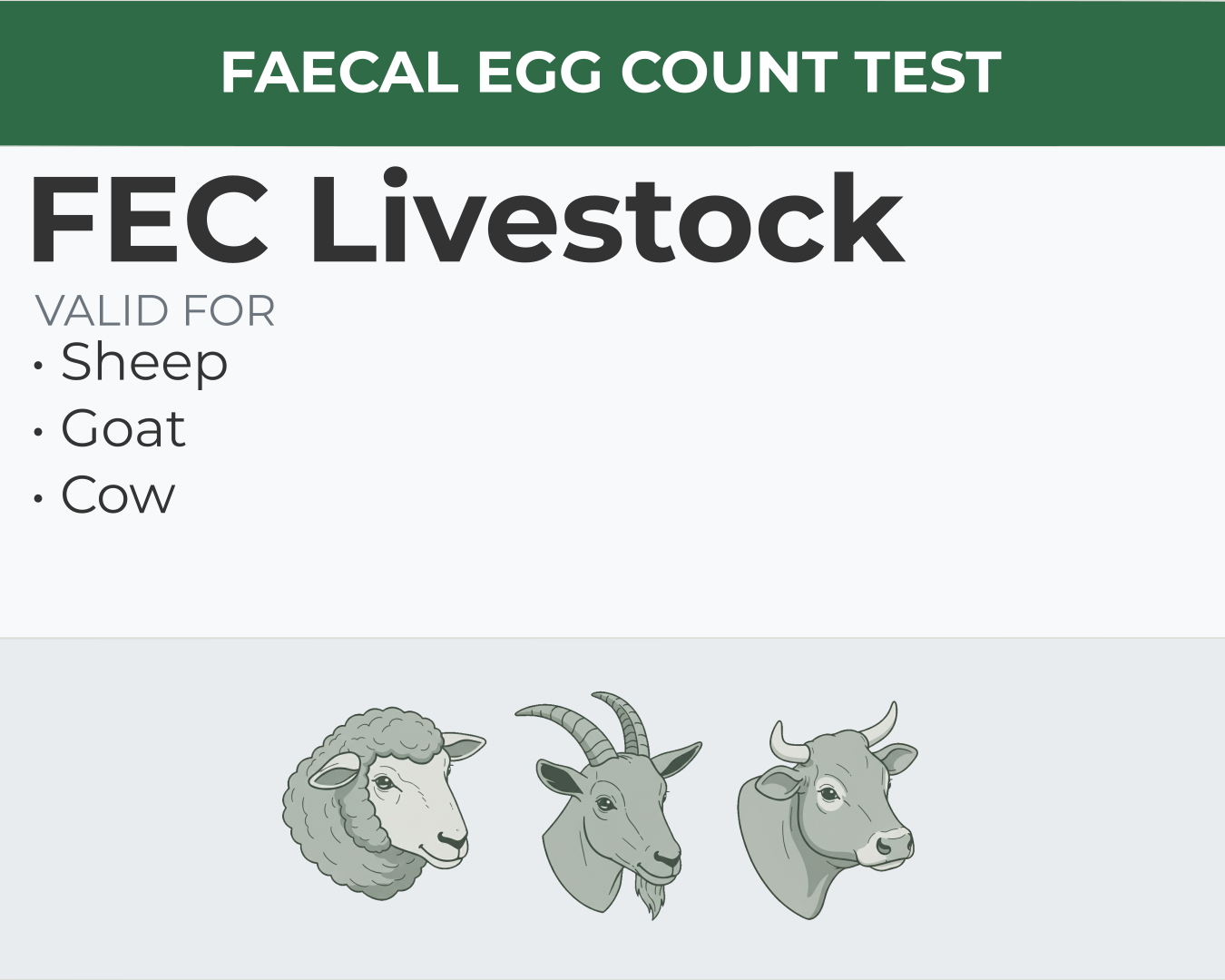
This test is suitable for:
- Sheep
- Goat
- Cow
Parasites this test checks for:
Strongyle Type, Nematodirus, Ascarid, Tapeworm, and Whipworm eggs
When to test:
- 2-4 times a year, before routine deworming, typically at the start of the rainy/grazing season
- If your livestock show clinical signs like weight loss, diarrhoea, anaemia, or rough coat
- After deworming to confirm dewormer effectiveness
Who to test:
- All livestock and weanlings
- Livestock showing clinical signs of infestation
- High risk groups include young stock, pregnant/lactating animals, or livestock grazing on heavily grazed pastures